Ceiling Leak Water Damage in Fish Hawk
Bubbling paint and a bowed ceiling require a careful inspection from below and above. The repair plan must account for overhead stability, the active source and moisture inside the assembly.
(888) 621-2041Assess the overhead wet area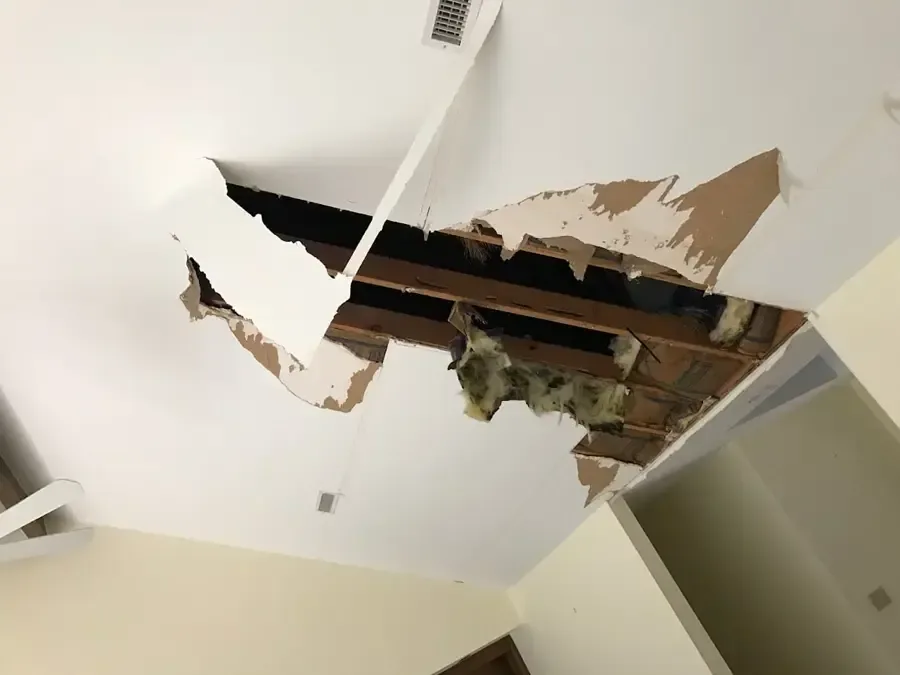
A ceiling leak in Fish Hawk can present as a soft patch, a stain or water escaping through a fixture opening. The first task is to decide whether the room beneath it is safe. The next is to trace the source above, keeping those safety and repair decisions connected.
First steps for ceiling leak water damage
- Restrict the space below. The room is assessed for falling finishes and electrical concerns, with occupants kept away from suspect overhead sections until safe access is established.
- Trace the water source. Inspection examines the space above the mark and related wall edges, distinguishing the source repair from the ceiling materials damaged by the release.
- Expose affected layers. Controlled removal creates access to wet insulation and framing while protecting adjacent contents and retaining a record of the original overhead damage.
- Measure before the patch. The remaining assembly receives moisture checks so new ceiling finishes are installed only after the relevant drying and source work have been addressed.
How ceiling leak water damage works
Describe changes in the finish
The inspection records sagging, staining and active drips, pairing those observations with accessible material checks to define the initial safety boundary beneath the ceiling.
Coordinate access above the room
Source inspection and restoration openings are planned together, allowing the needed repair while leaving sufficient access to remove damaged layers and evaluate retained framing.
Monitor overhead drying progress
Moisture checks follow the exposed assembly and adjoining wall tops. Readings that remain elevated prompt inspection of trapped layers, air access or an unresolved water source.
Set a clear closure point
The final assessment connects the repaired source with the condition of retained materials, identifying any outstanding work before the ceiling is enclosed and the room restored.
Read the ceiling as an assembly
Paint, board, insulation and framing respond differently to water. The exposed finish may show damage while another layer still holds moisture. Inspection should examine the accessible edges and the space above the mark, establishing where controlled removal will provide useful access instead of simply cutting around discoloration.
FishHawk Creek Elementary and Randall Middle School are schools listed for the community. A nearby homeowner describing a ceiling problem can give the room location, visible changes and any recent plumbing or roof work. Those details help direct the inspection to the overhead source and connected cavities.
Match the opening to the work needed
A small stain does not always define the repair boundary. Moisture can spread along a ceiling bay before appearing below. An opening should expose damaged material and allow the source to be assessed, while protecting the room from loose debris and wet finishes during removal.
- Furniture beneath a suspect section stays out of use until overhead safety is assessed.
- Electrical fixtures near wet marks need assessment before nearby work begins.
- Insulation blocking inspection may need removal to reveal damp framing.
- Wall tops receive checks when water travels down from the ceiling.
Bevis Elementary is another school serving as a familiar local reference. For an affected home, the description should distinguish a mark under a roof space from one under another room. The actual inspection then establishes the source and the route requiring treatment.
Ceiling Leak Water Damage help
An overhead wet patch deserves an assessment of the layers above it. Describe the stain, any movement in the finish and whether water continues to appear.
Do not turn a bulge into a household repair
Leave unstable material undisturbed
Puncturing a water-filled ceiling or pulling down softened board can release water and debris unexpectedly. Occupants should remain away from the section and avoid climbing beneath it. Controlled access begins after the overhead condition and nearby electrical hazards have been evaluated.
Once the source is identified, the appropriate repair can proceed alongside removal and drying. A supply release may also require pipe water damage cleanup in the connected walls or floor below.
Plan the patch around drying results
Retained framing and adjacent finishes should be checked before new ceiling board hides them. The moisture record shows whether the drying setup is reaching the affected area or whether another damp pocket needs access.
A reconstruction handoff should identify the source correction, removed materials and remaining finish work. That sequence avoids treating a smooth new ceiling as the only measure of a completed repair.
What does ceiling leak water damage cost in Fish Hawk, FL?
Ceiling leak cleanup in Fish Hawk depends on overhead access and how many layers became wet. Room protection, insulation removal and connected wall damage can expand the work beyond replacing the visibly marked ceiling board.
Localized ceiling wetness
$700 to $1,500
- Small affected section
- Accessible overhead source
- Focused material checks
Several ceiling bays
$1,500 to $3,000
- Extended wet framing
- Multiple access openings
- Insulation condition assessment
Ceiling and room damage
$3,000 to $4,500
- Connected wall wetness
- Room contents protection
- Wider drying footprint
The water damage cost calculator gives an estimate only. The inspection determines the scope, including water category, affected area, material class and drying delay.
Measured care for ceiling leak water damage
Rapid local response
The response team treats spreading water as urgent and gathers the source, room count and safe access details. Dispatch operates 24/7; conditions and availability determine the response.
IICRC S500 drying standard
The drying crew compares affected assemblies with dry reference materials, adjusts equipment to the evaporation load, and records progress. A dry-looking surface alone does not complete the work.
Claim-ready documentation
The technician links photographs to the moisture map and records material removal, equipment placement and drying readings. That record explains the restoration scope without promising an insurer's decision.
Local water experts
A property inspection distinguishes rain entry, an internal supply leak and contaminated outside water. The restoration plan follows the actual source and materials, with access and safety assessed separately.
Ceiling leak water damage in Fish Hawk
Ceiling inspections can assess wet rooms within ZIP 33547 when safe entry is available. Details about sagging, active dripping and the space above the mark help set the inspection priorities and determine which parts of the room need to remain unused.
The same service nearby: ceiling leak water damage in Lithia, Bloomingdale, Valrico.
Related water damage services in Fish Hawk
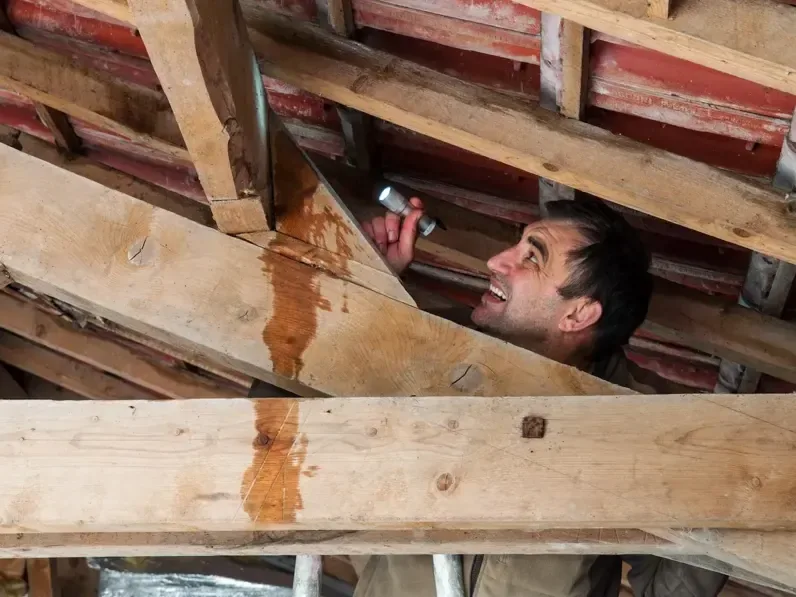
Roof Leak Water Damage in Fish Hawk
Roof entry can leave insulation and timber wet below the leak.
View service details ›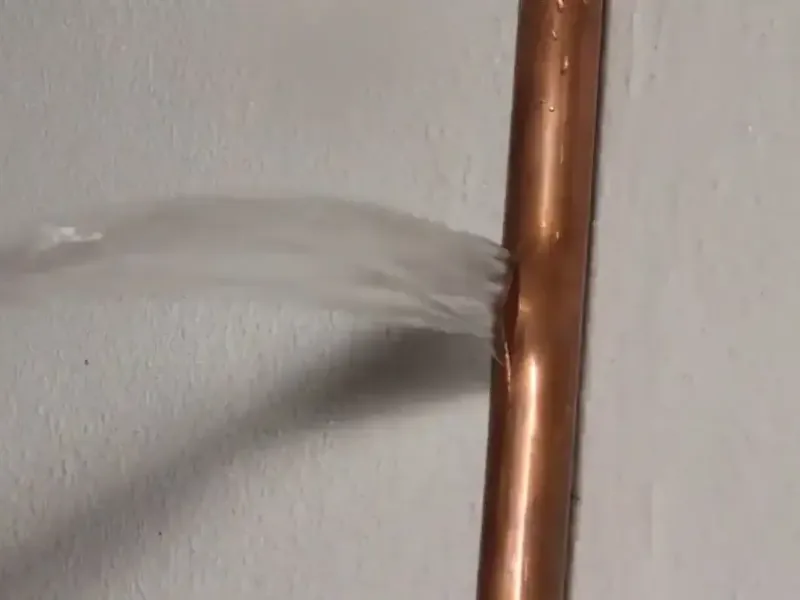
Burst Pipe Water Damage in Fish Hawk
A stopped supply leak leaves wet layers to inspect and dry.
View service details ›
Structural Drying and Dehumidification in Fish Hawk
Material readings guide airflow, humidity control and drying completion.
View service details ›Ceiling Leak Water Damage questions in Fish Hawk, FL
What does a bulging ceiling require first?
The area below it needs to remain clear until the overhead condition can be assessed. Water can weaken the finish and add weight to an assembly already under stress. Occupants should avoid standing beneath the bulge or puncturing it. The assessment establishes safe access, identifies the source and determines how damaged material can be removed under control.
Can ceiling paint hide moisture that still matters?
The visible finish reveals only part of the assembly. Water may remain in insulation, framing or the back of the board even when the room surface looks less wet. Material checks and inspection through suitable access establish what needs drying or replacement. Painting should follow that work so the new finish does not conceal an unresolved wet area.
Does a ceiling leak always come from the roof?
The source depends on what is above the affected space. Plumbing and other water-bearing components can also release water into an overhead assembly. Inspection should locate the actual source before defining the repair. The cleanup scope then follows the wet materials from that point to the room, including connected wall tops and any floor damage beneath the drip.
Will the entire ceiling have to be removed?
Removal is based on condition, water exposure and the access needed for treatment. Some areas may remain while damaged sections or obstructing insulation are removed. The scope should explain the selected boundaries and account for moisture beyond the stain. A decision based only on matching paint would overlook the condition of the concealed assembly above the room.
Can belongings stay underneath the work area?
Contents beneath damaged overhead material should remain out of use until the area is assessed. Where safe, suitable items can be moved or protected before controlled removal begins. Wet belongings need their own evaluation. The work plan should provide an access route that does not require occupants to pass beneath unstable finishes or through falling debris.
When can the replacement board be installed?
Installation should follow source correction and the drying assessment of retained materials. The relevant readings, access openings and removal decisions belong in the work record. If a damp section still requires treatment, closing it makes monitoring harder. The reconstruction handoff should clearly identify which parts are ready and which need additional attention before the ceiling is finished.
What should a ceiling damage request include?
Helpful details are the room affected, whether the ceiling is sagging and whether water is still dripping. The space above the mark and any known source repair also matter. Photos taken safely from outside the restricted area can document changes. No one needs to climb under a weakened section or open the ceiling to supply those details.
Keep the hidden ceiling layers in view
Drying records help establish when the room can move from removal to reconstruction.
(888) 621-2041Plan the ceiling inspection