Bloomingdale Crawl Space Water Removal
An underfloor puddle needs a safe access decision before anyone enters. For Bloomingdale properties with a crawl space, removal addresses collected water and the wet materials beneath the occupied rooms above.
(888) 621-2041Discuss the wet underfloor space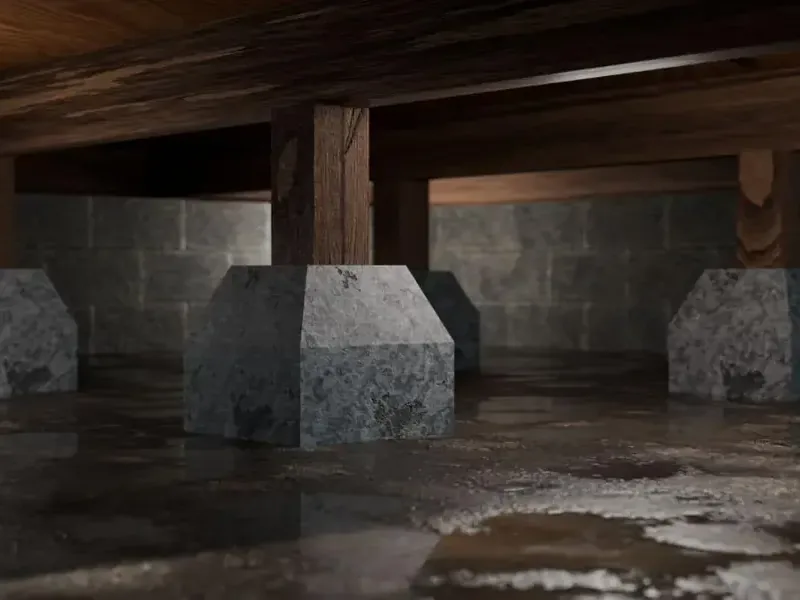
A crawl space water problem in Bloomingdale belongs to the building that actually has that underfloor area. The first task is establishing its layout, access, and water condition. An opening that allows a view of standing water does not automatically provide safe entry for a homeowner or a suitable route for removal equipment.
First steps for crawl space water removal
- Stay outside the opening. Observe visible water from a safe position. Do not crawl into low areas with standing water, exposed services, unstable surfaces, or uncertain clearance.
- Describe continuing inflow. Note whether water appears to be moving into the space. Source information helps coordinate removal with the work needed to prevent repeated wetting.
- Protect household access. Keep people and animals away from the entrance. Explain where removed material can travel without crossing the household's usual dry walking route.
- Mention underfloor obstructions. Describe visible insulation, stored items, and access restrictions without disturbing them. Those details help establish the inspection and equipment plan before workers enter.
How crawl space water removal works
Establish the entry and water condition
The assessment identifies access constraints, services, and visible contamination concerns. A suitable work route is chosen before workers or equipment move into the underfloor area.
Collect water and assess inflow
Removal targets accessible collection points. The inspection records whether water continues to enter and what source correction must occur before drying can progress.
Inspect insulation and the floor underside
Materials above the original puddle are checked for moisture and damage. Removal decisions should explain which layers prevent access or cannot remain in the affected assembly.
Monitor retained underfloor materials
Drying progress is measured at identified locations. The final record separates extraction, material removal, moisture results, and any remaining insulation or access repair required after the work.
Assess the opening before the water
Low clearance, concealed electrical services, unstable footing, and contaminated water can affect entry. Describe what is visible from outside and avoid crawling into the space to investigate. Equipment selection should follow an assessment of the opening, the collection areas, and the materials that could be disturbed during removal.
At a property near Bell Shoals Road, the cleanup plan should identify where the underfloor entrance sits relative to occupied rooms. Removed insulation and wet equipment need a route that keeps residue away from household traffic and dry storage areas.
- Describe the entry opening without climbing through it or reaching toward wet services.
- Record visible pooling and any continuing inflow from a safe position outside the space.
- Identify wet or hanging insulation that may obstruct inspection of the floor assembly.
- Keep pets and occupants away from open access points throughout the removal work.
Identify what continues to feed the space
Standing underfloor water can require source investigation as well as pumping. The assessment should establish whether a plumbing release or another entry path is continuing. Removing accumulated water without addressing the inflow can leave the same materials repeatedly exposed and prevent a useful drying assessment.
Properties around Culbreath Avenue and Natures Way Boulevard need individual inspections of their underfloor conditions. The scope should describe the collection areas and access limitations encountered, along with any insulation or other material that requires removal to expose retained moisture above the water.
Crawl Space Water Removal help
Water beneath the floor calls for an assessed entry route and a clear source plan. Describe the access opening and visible pooling without entering the affected underfloor space.
Check the underside of the occupied floor
After water collection, the underside of the floor may still contain damp framing or insulation. Those materials require their own assessment. Structural drying should address the accessible assembly and use readings to determine whether the chosen approach is reaching the wet surfaces.
Keep household fans outside the entry
Improvised airflow into an unassessed underfloor space can disturb residue and conceal an unresolved access hazard. A crew should establish the water condition and entry plan before placing equipment. Occupants should avoid routing cords through wet openings or operating electrical tools within the pooled area.
Restore access only after the work is recorded
The completion notes should distinguish water removed from materials dried. Photographs, source findings, and moisture readings help explain the remaining repair needs. Any insulation replacement or access closure should follow assessment of the retained floor assembly rather than the disappearance of the visible puddle.
What does crawl space water removal cost in Bloomingdale, FL?
Crawl space water removal in Bloomingdale has planning examples from $1,200 to $6,500. Safe access, pooled water, insulation involvement, and retained underfloor moisture determine the scope. Source correction and later material replacement should be identified separately from removal and drying.
Accessible pooled area
$1,200 to $2,500
- Limited water collection
- Entry route assessment
- Initial framing checks
Water and wet insulation
$2,500 to $4,500
- Insulation removal decisions
- Additional underfloor access
- Targeted moisture monitoring
Extensive underfloor wetness
$4,500 to $6,500
- Broader collection footprint
- Complex equipment placement
- Expanded assembly drying
The water damage cost calculator gives an estimate only. The inspection determines the scope, including water category, affected area, material class and drying delay.
Measured care for crawl space water removal
Rapid local response
The response team treats spreading water as urgent and gathers the source, room count and safe access details. Dispatch operates 24/7; conditions and availability determine the response.
IICRC S500 drying standard
The drying crew compares affected assemblies with dry reference materials, adjusts equipment to the evaporation load, and records progress. A dry-looking surface alone does not complete the work.
Claim-ready documentation
The technician links photographs to the moisture map and records material removal, equipment placement and drying readings. That record explains the restoration scope without promising an insurer's decision.
Local water experts
A property inspection distinguishes rain entry, an internal supply leak and contaminated outside water. The restoration plan follows the actual source and materials, with access and safety assessed separately.
Crawl space water removal in Bloomingdale
For properties along Bell Shoals Road, Culbreath Avenue, or Natures Way Boulevard that have accessible crawl spaces, describe the entry opening and visible water from outside. The assessment establishes the actual underfloor layout before choosing removal equipment or a drying approach.
The same service nearby: crawl space water removal in Lithia, Fish Hawk, Valrico.
Water damage restoration in Bloomingdale · every town covered
Related water damage services in Bloomingdale

Structural Drying and Dehumidification in Bloomingdale
Material readings guide airflow, humidity control and drying completion.
View service details ›
Water Extraction and Removal in Bloomingdale
Standing water removal reaches flooring edges and adjoining rooms.
View service details ›
Sewage Backup Cleanup in Bloomingdale
Contaminated water requires controlled removal and surface cleaning.
View service details ›Crawl Space Water Removal questions in Bloomingdale, FL
Does this service assume every local home has a crawl space?
The service applies where the individual property has an accessible underfloor space. Its foundation and access arrangement are established during assessment. The plan should describe the actual opening, clearance, and affected materials rather than applying a neighborhood assumption. A building with a different floor assembly needs an inspection and cleanup approach suited to that construction and its water path.
Can a homeowner enter briefly to find the source?
A short visit can still expose someone to electrical hazards, unstable footing, or contaminated water. The safer initial description comes from observations made outside the opening. A crew should assess entry conditions before investigation inside the space. Any visible inflow, wet insulation, or access obstruction can be reported without crawling beneath the floor or disturbing the area.
Will pumping out the puddle dry the framing above it?
Water removal clears the collection area, while framing and other materials may retain moisture afterward. The underside of the floor needs inspection and appropriate readings. Drying access may require a decision about insulation or other obstructing layers. The scope should distinguish extraction from the work needed to address the retained assembly so the disappearance of standing water is not treated as completion.
What happens when water keeps entering during removal?
The source condition needs investigation and coordination with the removal work. Pumping can address accumulated water, but recurring inflow can rewet materials and prevent stable drying progress. The record should describe the observed entry and identify what source correction is needed. That information determines which cleanup tasks can proceed and which depend on stopping additional water.
Does wet insulation always remain beneath the floor?
Retention depends on the material, damage, water condition, and whether it can be effectively assessed and dried. Insulation may also obstruct access to wet framing above it. The crew should explain the removal or retention decision for the actual assembly. Replacement should be coordinated with the drying result so newly installed material does not conceal moisture still needing attention.
How should contaminated material leave the underfloor area?
The work plan should establish a controlled route from the access opening to the disposal area while protecting dry household paths. Material handling depends on the water condition and the items removed. The homeowner should know which entrances need to remain clear and which areas are restricted. That planning helps prevent underfloor residue from being carried through occupied rooms.
What confirms that the underfloor work is ready to close?
A useful completion record describes water removal, source status, materials retained or discarded, and moisture measurements from the remaining assembly. Any insulation replacement or access repair should be listed separately. Closure should follow those findings rather than a visual glance through the opening. The homeowner can then understand what was completed beneath the floor and which repairs remain outstanding.
Assess the space beneath the room
Plan safe water collection and moisture checks for the floor assembly that remains above it.
(888) 621-2041Arrange an underfloor removal assessment