Bloomingdale Commercial Water Damage Cleanup
A wet business interior creates access decisions as well as repair work. Bloomingdale commercial cleanup organizes affected rooms, protected equipment, and drying zones around the actual water path and building conditions.
(888) 621-2041Discuss the affected business rooms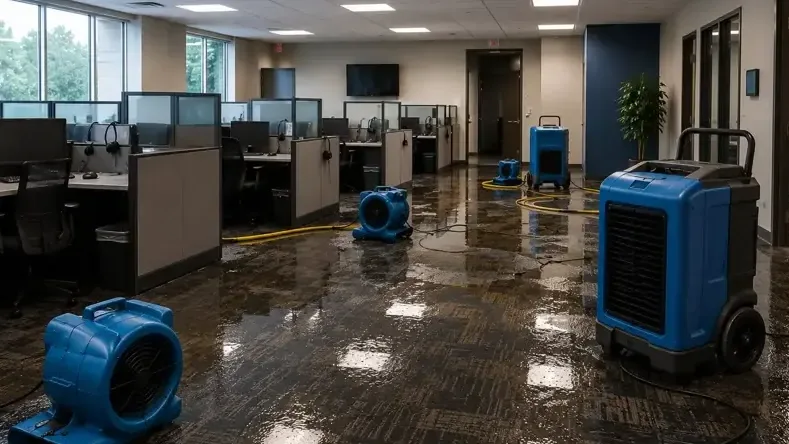
Commercial water damage in Bloomingdale needs a room plan as well as an extraction plan. Grocery stores, restaurants, banks, and medical offices are accessible along Bloomingdale Avenue and Lithia Pinecrest Road. Within an affected premises, the cleanup assessment should identify where water traveled and which activities, equipment, or entrances share that space.
First steps for commercial water damage
- Name the property contact. Identify the person coordinating tenant, building, and source repair decisions. That contact should receive findings and approve any changes affecting access or the cleanup scope.
- Separate affected circulation. Keep occupants away from wet electrical areas and unstable finishes. Describe usable entrances and exits before equipment or removed materials travel through the business space.
- Document contacted contents. Photograph affected stock, files, furnishings, and fixed equipment from safe positions. Note items requiring a specialist before movement so handling can be coordinated with cleanup.
- Explain operational access needs. Identify rooms that need authorized access and any equipment service appointments. The work plan should account for those requirements while preserving the drying area's intended conditions.
How commercial water damage works
Map water spread and decision responsibilities
The assessment identifies wet rooms and contacts responsible for source work, contents, and building approvals. Those details establish the starting scope for the premises.
Plan controlled removal through the business
Extraction and damaged material handling are arranged around safe circulation and protected contents. The route should avoid carrying water or residue through otherwise unaffected occupied areas.
Set drying zones around retained finishes
Equipment and access openings are matched to the wet materials. Room conditions and measurement locations are recorded so progress can be reviewed without relying on appearance or operational pressure.
Deliver a clear restoration handoff
The handoff identifies drying results, equipment concerns, and unfinished repairs. The property contact can coordinate remaining trades and room use from the documented cleanup findings.
Establish who can approve access and scope
A tenant, building manager, and equipment service contact may each control different decisions. The initial conversation should establish who can authorize entry, move contents, and coordinate source repair. Clear responsibility keeps a wet room from waiting on an avoidable access issue while also protecting equipment that should not be moved casually.
For a business using access through the Bell Shoals Road area, describe the entrance available to workers and the route for removed material. Customer circulation and unaffected offices should be considered before extraction equipment or disposal containers occupy a shared passage.
- Identify rooms containing sensitive equipment that needs specialist handling before relocation occurs.
- Record water contact with stock, files, furnishings, and fixed cabinets as separate categories.
- Keep safe exits and unaffected circulation routes clear when planning equipment placement indoors.
- Establish which property contact receives changes when hidden wet materials expand the proposed scope.
Define the wet boundary before choosing a work zone
Water can pass beneath partitions or connected floor finishes into a room that remains in use. Inspection should follow those transitions and identify the materials needing removal or drying. The affected zone should reflect actual findings, while occupancy decisions account for access, electrical concerns, contamination, and the work underway.
Different business interiors present different contents and finish arrangements. A fixed reception counter, storage room, or equipment enclosure can obstruct drying access. The scope should explain those restrictions and identify the responsible party for moving or servicing items that the cleanup crew should not disconnect.
Commercial Water Damage help
Water inside a business needs a clear contact and a room plan. Describe affected spaces, restricted equipment, and usable entrances so the assessment can coordinate removal with property responsibilities.
Coordinate removal with business records and equipment
Photographs and an inventory of contacted items help connect the original damage to removal decisions. After water extraction, remaining floor and partition layers require moisture assessment. Equipment placement should preserve necessary access for authorized personnel while maintaining the room conditions used to dry the retained structure.
Do not restart wet business equipment
Electrical devices and specialized equipment contacted by water need appropriate assessment before use. Equipment servicing should include its internal condition as well as the outer casing. Keep the affected equipment isolated and identify its service contact so cleanup access, contents handling, and restart decisions can be coordinated safely.
Make the return to use a documented decision
Drying completion, finish repair, and business readiness are related but separate milestones. The handoff should identify the condition of retained materials and tasks still requiring other trades. A responsible property contact can then coordinate remaining repairs and room use with a clear record of the cleanup performed.
What does commercial water damage cost in Bloomingdale, FL?
Commercial water cleanup in Bloomingdale has planning examples from $2,000 to $15,000+. Affected rooms, contents restrictions, water condition, and drying access shape the scope. Equipment service, stock decisions, and reconstruction should have clear boundaries within the written proposal.
Limited business room
$2,000 to $4,000
- Defined wet area
- Basic contents coordination
- Focused moisture assessment
Several connected spaces
$4,000 to $8,000
- Multiple room inspections
- Shared access planning
- Expanded drying arrangement
Broad commercial loss
$8,000 to $15,000+
- Complex contents restrictions
- Extensive material decisions
- Wider monitoring scope
The water damage cost calculator gives an estimate only. The inspection determines the scope, including water category, affected area, material class and drying delay.
Measured care for commercial water damage
Rapid local response
The response team treats spreading water as urgent and gathers the source, room count and safe access details. Dispatch operates 24/7; conditions and availability determine the response.
IICRC S500 drying standard
The drying crew compares affected assemblies with dry reference materials, adjusts equipment to the evaporation load, and records progress. A dry-looking surface alone does not complete the work.
Claim-ready documentation
The technician links photographs to the moisture map and records material removal, equipment placement and drying readings. That record explains the restoration scope without promising an insurer's decision.
Local water experts
A property inspection distinguishes rain entry, an internal supply leak and contaminated outside water. The restoration plan follows the actual source and materials, with access and safety assessed separately.
Commercial water damage in Bloomingdale
Grocery stores, restaurants, banks, and medical offices are accessible along Bloomingdale Avenue and Lithia Pinecrest Road. For premises reached through the Bell Shoals Road area, describe the affected rooms, customer access restrictions, and the person coordinating building and tenant decisions.
The same service nearby: commercial water damage in Lithia, Fish Hawk, Valrico.
Water damage restoration in Bloomingdale · every town covered
Related water damage services in Bloomingdale

Water Extraction and Removal in Bloomingdale
Standing water removal reaches flooring edges and adjoining rooms.
View service details ›
Structural Drying and Dehumidification in Bloomingdale
Material readings guide airflow, humidity control and drying completion.
View service details ›
Sewage Backup Cleanup in Bloomingdale
Contaminated water requires controlled removal and surface cleaning.
View service details ›Commercial Water Damage questions in Bloomingdale, FL
Can a business keep unaffected rooms in use during cleanup?
That decision depends on the water condition, safe access, electrical concerns, and the separation between occupied rooms and the work area. The assessment should identify shared circulation and any connected wet assemblies. The responsible property contact can then coordinate room use with the cleanup plan. An apparently dry room may still share a route or material layer requiring inspection.
Who should coordinate the tenant and building responsibilities?
A designated property contact should connect the people responsible for source repair, building finishes, contents, and access approval. Their authority may differ by the premises arrangement, so it should be clarified before work expands. Cleanup findings can then reach the appropriate decision maker without confusion. The estimate should state which tasks belong to the proposed work and which require another party.
How should wet files or business stock be handled?
Contacted items should be documented and assessed before relocation or disposal, with handling appropriate to the material and water condition. Sensitive records or specialized stock may require a separate service decision by the business. The cleanup crew needs that information when planning access. Carrying dripping items through dry offices can spread the affected area and complicate the original loss record.
Does restarting equipment show that it escaped damage?
Operation alone is not an appropriate safety assessment for equipment contacted by water. Electrical or specialized service personnel may need to inspect it before use. The business should identify the relevant contact and keep the equipment isolated while that decision is made. Interior cleanup can address surrounding finishes, but it should not substitute for the equipment's own service requirements.
Why inspect partitions beyond the room with standing water?
Water may pass beneath a partition or continuous floor covering into connected space. The visible collection area can therefore be smaller than the affected assembly. Moisture checks should follow those transitions, especially where a room remains occupied. The documented boundary helps explain any added work and allows the business to plan access using the actual condition of the premises.
How can drying progress be communicated without disrupting work?
A concise record can identify the drying zones, measurement locations, changing readings, and planned adjustments. The property contact should also receive any changes affecting entrances, equipment access, or repair scheduling. Consistent updates help the business coordinate its own decisions while the cleanup follows the retained materials. Completion should be tied to those findings rather than an assumed reopening date.
What should the final commercial cleanup record include?
The handoff should list affected rooms, removed finishes, retained material results, and any contents or equipment concerns requiring separate attention. Photographs and source repair notes help connect the work to the original event. Outstanding reconstruction tasks should be clearly identified. That gives the property contact a practical basis for scheduling remaining trades and deciding how each space returns to use.
Plan cleanup around the affected premises
Connect water removal, drying zones, and the remaining repair decisions in one documented scope.
(888) 621-2041Arrange the commercial damage assessment