
When outside water remains high, a homeowner needs more than a description of the wet carpet. The cleanup team also needs to know whether water is still entering and whether the building can be approached safely. Brandon's Timber Pond Drive flooding report from September 2018 described rising interconnected ponds and lakes during extended rainfall. That history offers a concrete setting for discussing persistent outside water, changing access and the information that helps organize removal inside an affected property.
Key takeaways
- Describe outside water changes alongside indoor observations.
- Keep public drainage updates dated in the household file.
- Ask how the removal plan accounts for continuing entry.
- Avoid directing discharged water toward another property.
- Confirm the final interior condition before scheduling replacement finishes.
Understand the sequence reported at Timber Pond
On September 10, 2018, FOX 13 reported roadway flooding on Timber Pond Drive. Residents near Mead Lake and Timber Pond described recurring flooding, and Hillsborough County attributed the event to rising levels in interconnected ponds and lakes during extended rainfall.
The report connected the standing water with conditions beyond an individual home's interior.
The county statement described a temporary pump serving the area from the middle of July and explained that pumping from Mead Lake required regulation and monitoring to protect downstream locations. Those details show why a public drainage operation involves the receiving area as well as the location from which water is being removed.
For a household dealing with a new water loss, the immediate task is to record the current outside and inside conditions separately. A dated public update can stay with that account.
The cleanup team needs the property's present entry points and access restrictions to plan the work inside the building.
- Keep the date attached to every public drainage update.
- Describe the present property condition in a separate note.
- Record which entrances remain accessible from dry ground.
- Tell the restoration team about continuing indoor entry.
Track changes from a repeatable safe viewpoint
An exterior photograph is easier to compare when it includes a fixed feature such as a threshold, step or wall surface. The person recording conditions should remain in an accessible dry position.
A series taken from that viewpoint can show how the visible boundary changes without requiring anyone to walk into the water.
Indoor photographs should use their own reference points, such as a doorway or the edge of a cabinet. Outside water and an interior wet patch should not be combined into a vague statement that everything is unchanged.
Separate views allow the team to understand which part of the property is improving or developing a new problem.
Brief written notes can explain anything a photograph misses, including the sound of continuing entry or a room that remains inaccessible. The account should identify observation time and location.
That gives a later visitor a usable sequence when the appearance at arrival differs from what the household first reported.
- Use a recognizable fixed feature in each view.
- Label outside and indoor photographs separately.
- Mark spaces that could not be checked safely.
- Add a new note when the visible condition changes.
Discuss removal as a changing work plan
The water extraction service begins with the liquid that can be reached and removed under the property's actual conditions. The crew should explain its work area and any limits caused by continued entry.
The owner can then understand which tasks are being completed and which depend on a change outside.
A cleared floor may need another inspection if water returns. The useful question is where the returning water is coming from and what the technician observes at that location.
The revised plan should describe that finding and explain how it affects further removal or inspection of nearby materials.
Equipment access and the discharge route should also be part of the explanation. The household should leave pumping arrangements to the responsible team and avoid improvised discharge toward neighboring areas.
A practical plan identifies the work route without creating another water problem outside the room being cleared.
- Ask which spaces can be worked in under current conditions.
- Record where water reappears after removal.
- Keep access and discharge arrangements under professional direction.
- Request an explanation when the work sequence changes.
Make contents decisions before the room is rearranged
A flooded room can contain items with very different conditions, from a wet floor covering to belongings above the visible water. The owner should organize the inventory by original position.
Wide room views and closer item photographs help preserve those relationships before movement changes the scene and makes later questions harder to answer.
The flood cleanup service can assess affected interior materials and handling needs. The household should discuss a suitable approach before moving wet items through a dry room.
A separate temporary storage plan helps keep unaffected belongings accessible while inspection and cleanup continue elsewhere in the property.
For items proposed for removal, the record should state what the item is, where it was found and the reason for the decision. The owner can ask how the proposed handling relates to its condition.
This creates a useful decision record without treating every possession in the same room as an identical cleanup task.
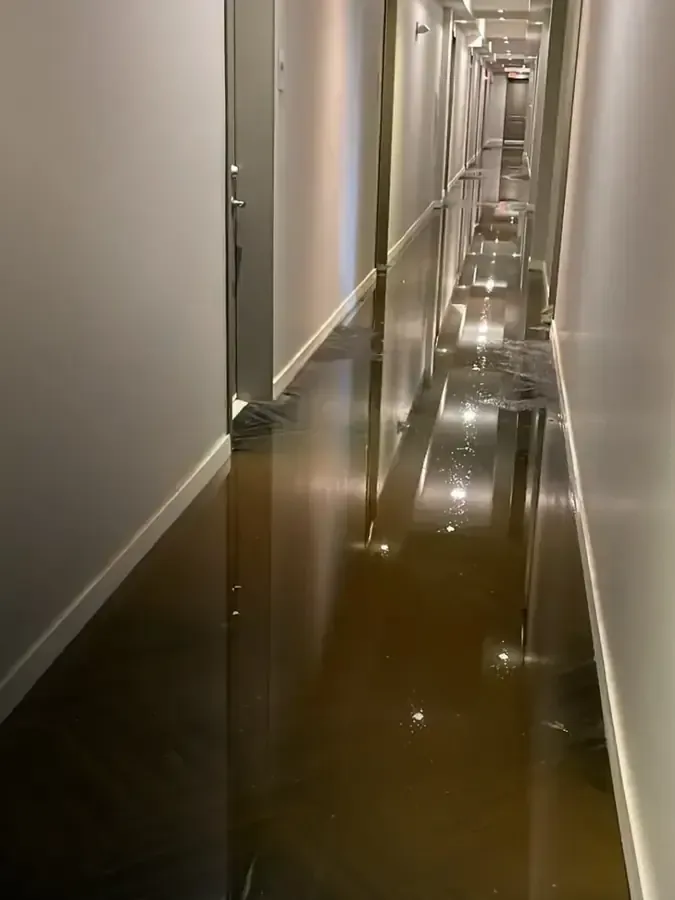
Move from standing water to material monitoring
Once the work can progress beyond recoverable liquid, the team should identify the retained surfaces needing moisture checks. The list may include floor edges, wall materials and accessible adjoining areas based on the inspection.
Each entry should name a specific location so progress can be compared over subsequent visits.
The structural drying service addresses the material conditions left after removal and cleanup. The owner should receive an explanation of equipment placement and the observations used to adjust it.
A useful report connects the setup with the wet assembly rather than describing equipment as a stand alone measure of progress.
Continued outside water remains relevant to the monitoring record if it changes the interior condition again. The team should document any new entry as a new observation.
Preserving that sequence helps explain why a reading or work area changed instead of allowing renewed water to be confused with the earlier retained moisture.
Use separate folders for drainage and interior work
Public drainage correspondence belongs in a dated section of the household file. Interior extraction, contents decisions and drying results belong in another section organized by room.
Keeping them connected but clearly labeled helps the owner find the right information when a question concerns the street, the building or a particular damaged item.
Hillsborough County offers its FEMA Effective Flood Zone Viewer and a Floodplain Viewer developed from watershed studies. A property map can be retained with the household's planning documents.
The current damage record should still describe the observed entry, affected rooms and work actually performed at the property.
Before replacement finishes are scheduled, the owner should have a closing account of retained materials and remaining open areas. Final photographs can be paired with the repair proposal.
That handoff turns the earlier sequence of changing water conditions into a clear list of completed cleanup tasks and work still needed to restore the room.
- File public updates by their publication or report date.
- Organize interior work by the affected room.
- Save property maps with planning documents.
- Ask for a specific list of unfinished repair tasks.
Questions
What makes persistent outside water important to extraction?
The crew needs to know whether new water continues entering the work area and whether equipment can be reached safely. Those conditions can change the sequence of removal. A current description of entry and access helps the team explain the practical limits and next actions.
What should be saved from a drainage report?
The date, reporting agency, described location and stated action are useful details. The household can retain the original update alongside its own observations. This preserves the public account while keeping the property's interior condition clear for the cleanup team.
How should contents be listed after pond floodwater enters?
A room based list should identify each affected item and its original position. Photographs can distinguish belongings at floor level from those stored above it. The cleanup team can then discuss handling and removal decisions with the owner using a shared inventory.
What is needed before new flooring is installed?
The repair contractor should receive the final condition of the retained assembly and the documented scope of removed material. Any remaining source or access issue should be resolved in the work plan. The finish proposal can then match the actual room condition left after cleanup.